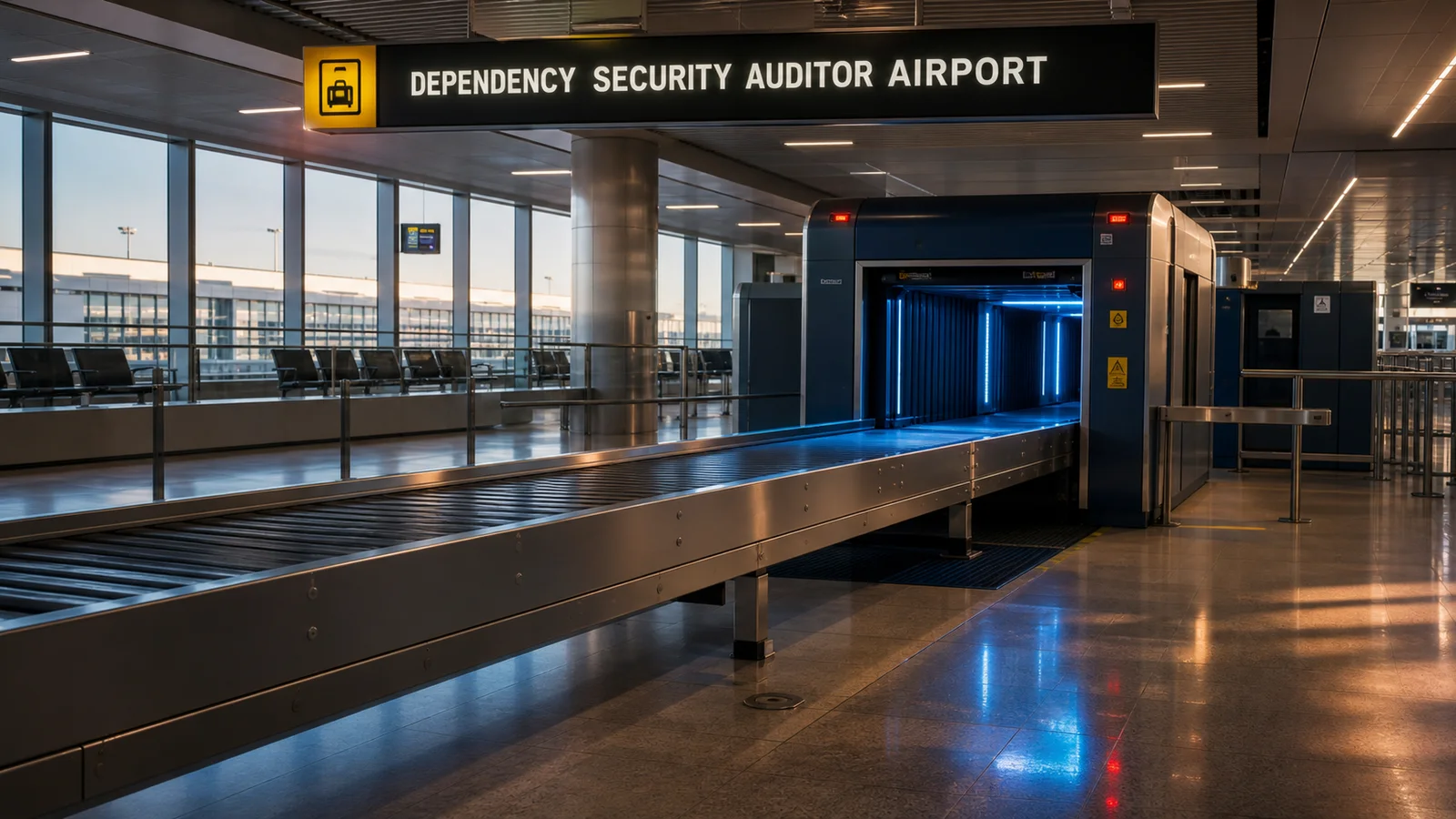
Lab idea: make dependency security feel like airport baggage screening, not panic. Every package moves through the scanner before production. The gate separates what clears, what is outdated, what is vulnerable, and what needs manual inspection.
The problem
Most repos accumulate more dependency signals than a human can comfortably trust. A scanner finds CVEs. A package manager finds stale versions. A lockfile is missing in one app. A Python requirements file includes another file and quietly turns exact version evidence into fog. Very professional fog, but fog.
The mistake is treating all of that as one blob of danger.
The lab
Dependency Security Auditor should inspect the repo by ecosystem, prefer lockfiles over loose manifests, and keep five lanes separate:
- Cleared dependencies with no known advisory on the resolved version.
- Outdated dependencies where freshness risk is not automatically a CVE.
- Vulnerable dependencies with exact package, version, advisory, severity, fixed version, and scanner source.
- Scanner errors where a tool failed, timed out, or could not support the detected package manager.
- Weak evidence where missing lockfiles, unpinned Python requirement includes or constraints, or manifest-only projects require manual inspection.
The hardening is intentionally boring: OSV scans receive the lockfiles discovered in the repo instead of guessing the whole tree, CI test dependencies install from hash-checked pins, and Bun projects can still use package-lock.json as an explicit npm audit fallback when that is the practical scanner path.
The payoff
The article can show a practical workflow for adding dependency security without turning every PR into ceremony: fast checks before push, fuller scans in CI, scheduled sweeps for drift, and remediation plans that avoid blind major-version jumps.