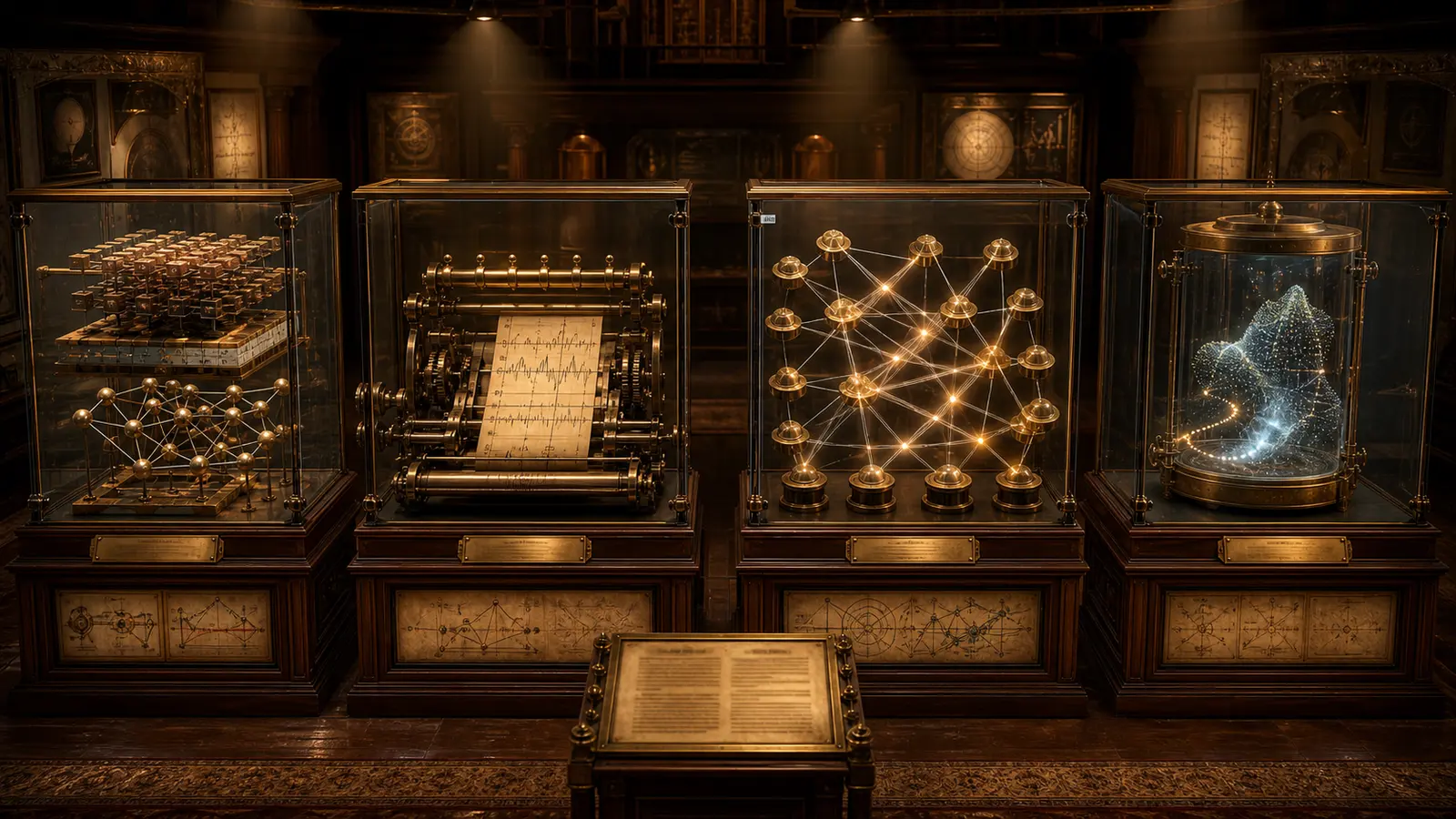
Transformer-style attention architectures became dominant because they solve a general problem: elements often need to decide which other elements matter.
That is not a text-only problem. It appears in language, images, audio, code, molecules, documents, retrieval systems, and multimodal interfaces.
The Core Bet
Attention makes interaction dynamic. In this article, "attention architecture" means a backbone where attention is the main mixing operation, not attention as a standalone model.
Instead of hard-coding a local neighborhood or carrying a fixed state, the model learns weights over relationships. In a Transformer, each token or patch can mix information from other positions through attention heads, then process the result through feedforward blocks.
Encoder-only models are strong for representation. Decoder-only models are strong for autoregressive generation. Encoder-decoder models are strong when one sequence conditions another. Vision Transformers apply the same idea to image patches. Sparse attention changes the interaction pattern to reduce cost.
When This Family Fits
Use this branch when flexible interaction is central.
Text naturally fits because words depend on context. Code fits because distant symbols can matter. Vision can fit when global relationships are important. Multimodal systems fit because one representation often needs to condition another.
Attention is powerful when the model needs to compare, retrieve, align, or reason across elements.
What To Watch
Attention can be expensive. Full attention scales poorly with long context, and bigger context windows do not automatically mean better reasoning. The representation, training data, retrieval layer, and objective still matter.
Sparse attention, sliding windows, recurrence, state space hybrids, and retrieval augmentation are engineering responses to the same pressure: flexible interaction is useful, but unlimited interaction is not free.
Where It Connects
Attention often acts as the backbone for hybrid systems. It can sit inside speech models, video generators, protein models, retrieval systems, and mixture-of-experts language models.
The useful question is not "is it a Transformer?" The useful question is what the attention is allowed to see, what it conditions on, and what cost that creates.